
Aluminum doors are a different problem from wooden doors when it comes to smart locks. The profiles are narrower, the mortise dimensions follow aluminum door hardware standards, and a lock designed for a thick wooden door will not fit — or will look wrong — on a slim aluminum frame. The cost of a wrong fit is not just the sample: it is weeks of delay and a stalled project.
This guide is written for door manufacturers, distributors, importers and project buyers who need smart locks for aluminum doors, including broken-bridge (thermally broken) profiles. It covers what to measure, which functions to choose, and how to order with confidence.
Why Aluminum and Broken-Bridge Doors Need Different Locks
Aluminum doors use narrow profile frames, and broken-bridge doors add an insulating thermal break between the inner and outer profiles. Standard residential locks are often too large for the profile width, and the locking mechanism must align with aluminum door hardware. The most common sourcing mistake is ordering by photo: two doors that look identical can have different profile widths and mortise positions. Compatibility must be confirmed against measurements, not appearance. Broken-bridge doors are increasingly common in energy-efficient buildings, and the lock must respect the thermal break without compromising the door’s insulation or structure. Suppliers that understand aluminum door hardware can recommend the right family early; suppliers that only know wooden-door locks will send samples that do not fit.
What to Measure Before Choosing a Lock
Collect the following details before contacting any supplier. They make the difference between a recommendation that fits and one that does not.
Profile Width and Narrow Frames
Measure the visible frame width of the door profile and provide it in millimetres. Narrow-frame aluminum doors only accept compact locks; wider profiles accept standard-sized locks. For broken-bridge profiles, also note the bridge position if possible, since it affects fixing depth.
Lock Body Size and Mortise
Record the existing lock body dimensions, mortise cutout and fixing hole positions. Even within aluminum doors, profiles differ by manufacturer, so the mortise is the most common source of mismatch. If you cannot measure, send clear photos with a ruler in frame — a photo with a scale bar is far more useful than one without.
Door Opening Direction and Handle Type
Note whether the door is left or right handed, hinged or sliding, and which handle style it uses. Most aluminum door locks support both directions, but handle placement and strike plate positioning depend on it — confirm before ordering.
Hinged vs Sliding Aluminum Doors
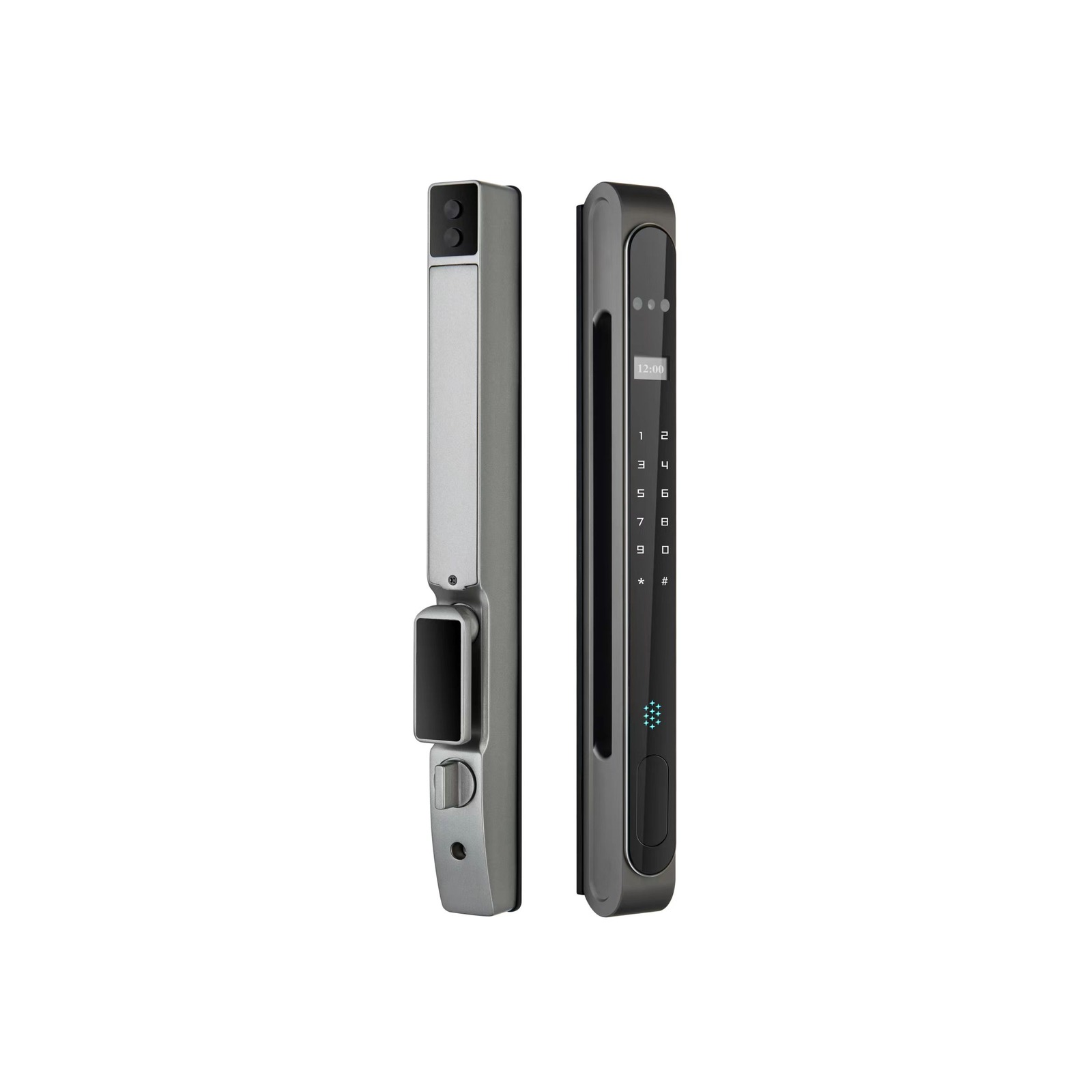
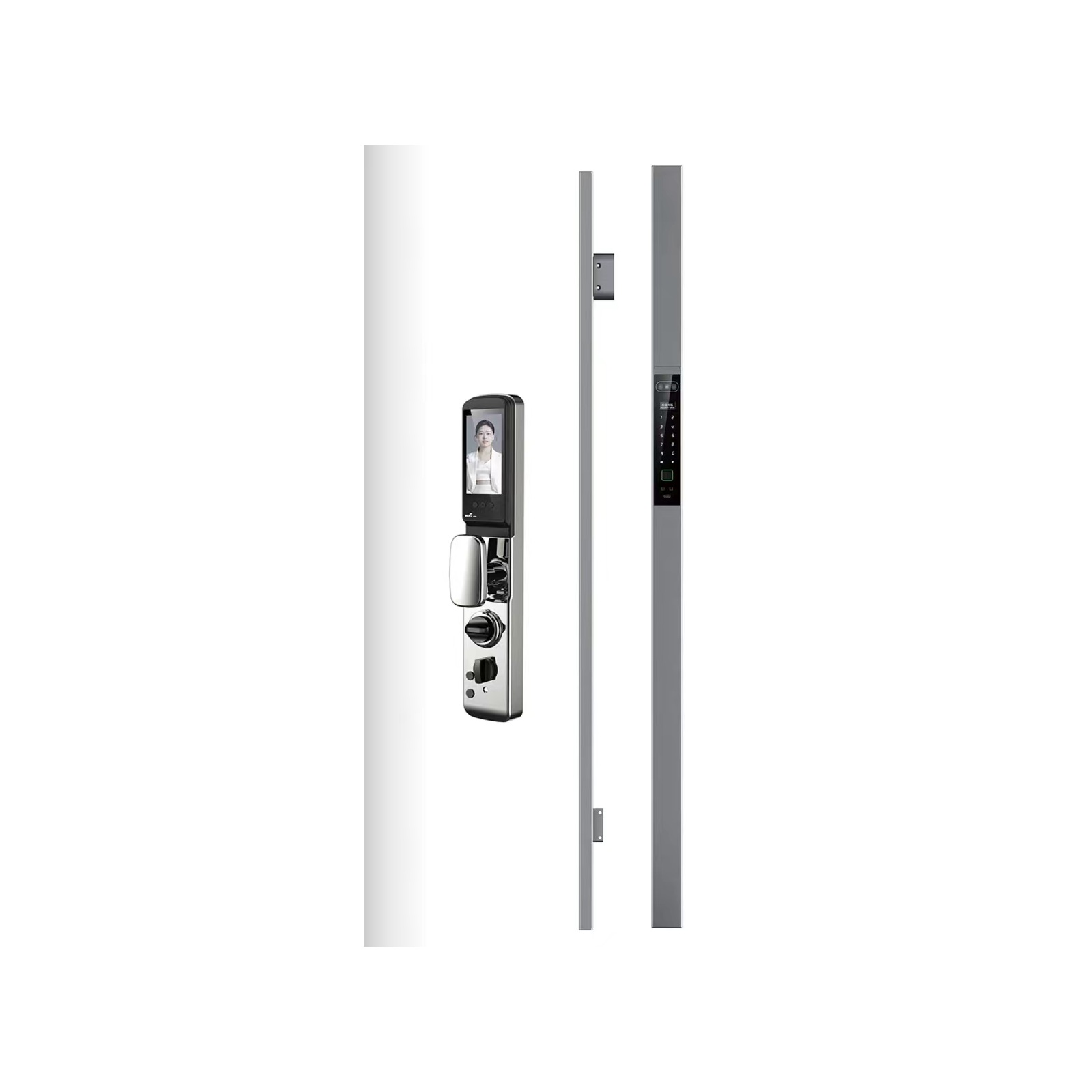
Hinged aluminum doors take a standard locking unit; sliding doors need a different mechanism. Broken-bridge sliding doors are common in energy-efficient buildings and need locks designed for sliding aluminum profiles — a separate product family from hinged locks. Decide your door type first; it determines the entire family you should evaluate.
Lock Functions to Consider for Your Market
Our aluminum door lock range includes face recognition and fingerprint models, with password, card and app access depending on the configuration. Choose functions by market, not by feature count: entry-level markets sell reliably on fingerprint and password, while premium projects prefer face recognition and app control. For app-enabled models, check which app and cloud the lock uses — Tuya-based models are widely used across markets and support multiple languages, which simplifies local deployment. For apartment and commercial projects, temporary codes and access records are often requested, so confirm those options early. Battery life and emergency power are also worth confirming for aluminum doors in commercial use, where doors are opened frequently. For distributors, check that the models you plan to stock carry documentation that covers your target market, so the same SKU can be listed and sold without rework.
Face Recognition vs Fingerprint for Aluminum Door Projects
| Criteria | Fingerprint Models | Face Recognition Models |
|---|---|---|
| Best for | Entry and mid-range residential, easy demonstration | Premium doors, apartments, commercial projects |
| Speed | Fast, one-hand operation | Contactless, convenient with hands full |
| Price band | Lower | Higher |
| Market fit | Volume retail and distribution | Project supply and branding |
For volume distribution, fingerprint models offer the best balance of price and reliability. For apartment and commercial projects, face recognition adds contactless convenience and a stronger premium position. Your market’s price band usually decides the split — confirm it before shortlisting models.
Common Mistakes to Avoid When Buying Aluminum Door Locks
- Ordering by photo instead of measurements
- Assuming one lock fits all aluminum profiles
- Skipping the sample test on the actual door
- Ignoring the thermal break on broken-bridge doors
- Choosing features before checking fit
How Door Factories Add Smart Locks to Their Product Line
Many door manufacturers start by offering one compatible smart lock as an option, testing it on their standard profile, then expanding. A pilot order on a standard profile is a low-risk way to validate fit, installation time and after-sales support before committing to a full range. Distributors can follow the same path with their best-selling door types.
Installation Tips for Aluminum Door Locks
Test the sample on the actual door before mass orders and follow the mortise template exactly. Check strike plate alignment before final tightening. On broken-bridge profiles, avoid over-tightening screws across the thermal break, which can compromise the insulation. A well-matched lock replaces the existing unit in a short on-site session; significant mortise modification takes longer — another reason sample testing matters.
What Door Factories and Distributors Should Check Before Ordering
Confirm three things before a bulk order. First, sample testing: install the sample on the actual aluminum door profile and verify the mortise, faceplate and lock body fit. Second, documentation: certificates are model-specific, so confirm which documents cover the exact model you order — our certification audit guide explains the checks. Third, specification lock-in: the production units must match the approved sample and model number, with any change confirmed in writing. Confirm lead time and shipping documents at the same time, and review logo and packaging proofs if branding is involved. Door factories can also provide their standard profile drawings or a template lock body so we can confirm the match before sampling.
Where These Locks Work Best
Aluminum door smart locks fit residential villas and apartments with aluminum entry doors, energy-efficient broken-bridge doors, and light commercial applications such as offices and shopfronts. Door manufacturers use them to offer a smart lock option alongside their aluminum door lines; distributors use them to serve local renovation and project demand; smart home companies bundle them into broader connected-home offerings. For renovation markets, check whether the existing aluminum door uses a standard mortise — retrofit-friendly models shorten the installation process. The range covers both face recognition and fingerprint models, so there is a fit for entry-level retail and premium projects alike.
Frequently Asked Questions
Can a standard wooden-door smart lock fit an aluminum door?
Usually not without modification. Aluminum profiles are narrower and use different hardware standards, so the lock body and mortise must match the aluminum door profile.
What information should I send for model matching?
Profile width, door type (hinged or sliding), opening direction, lock body dimensions or photos with a scale, target market and required functions. Clear information means a faster, more accurate recommendation.
Can you supply locks for broken-bridge doors?
Broken-bridge profiles are a common aluminum door type in our range. Confirm the profile width and send a sample order for testing before mass production. We can also review your profile drawings to confirm the match before you order samples.
Do you support OEM branding for aluminum door locks?
Yes — logo, packaging and configuration customization are part of our OEM/ODM service, described in our OEM/ODM guide.
How do I confirm the certificate covers the model I order?
Request the certificate scope for the exact model number before ordering. Certificates cover only what they name.
How long does installation take?
A well-matched lock replaces the existing unit in a short on-site session. Significant mortise modification takes longer — which is why we recommend testing a sample on the actual door first. If your market uses both hinged and sliding aluminum doors, plan for two product families instead of forcing one model.
Can the same lock fit different aluminum door brands?
Aluminum profiles vary by manufacturer even when they look similar. Always match the lock body and mortise to your specific profile — that is why we recommend sending measurements and testing a sample.